
DOING GOOD
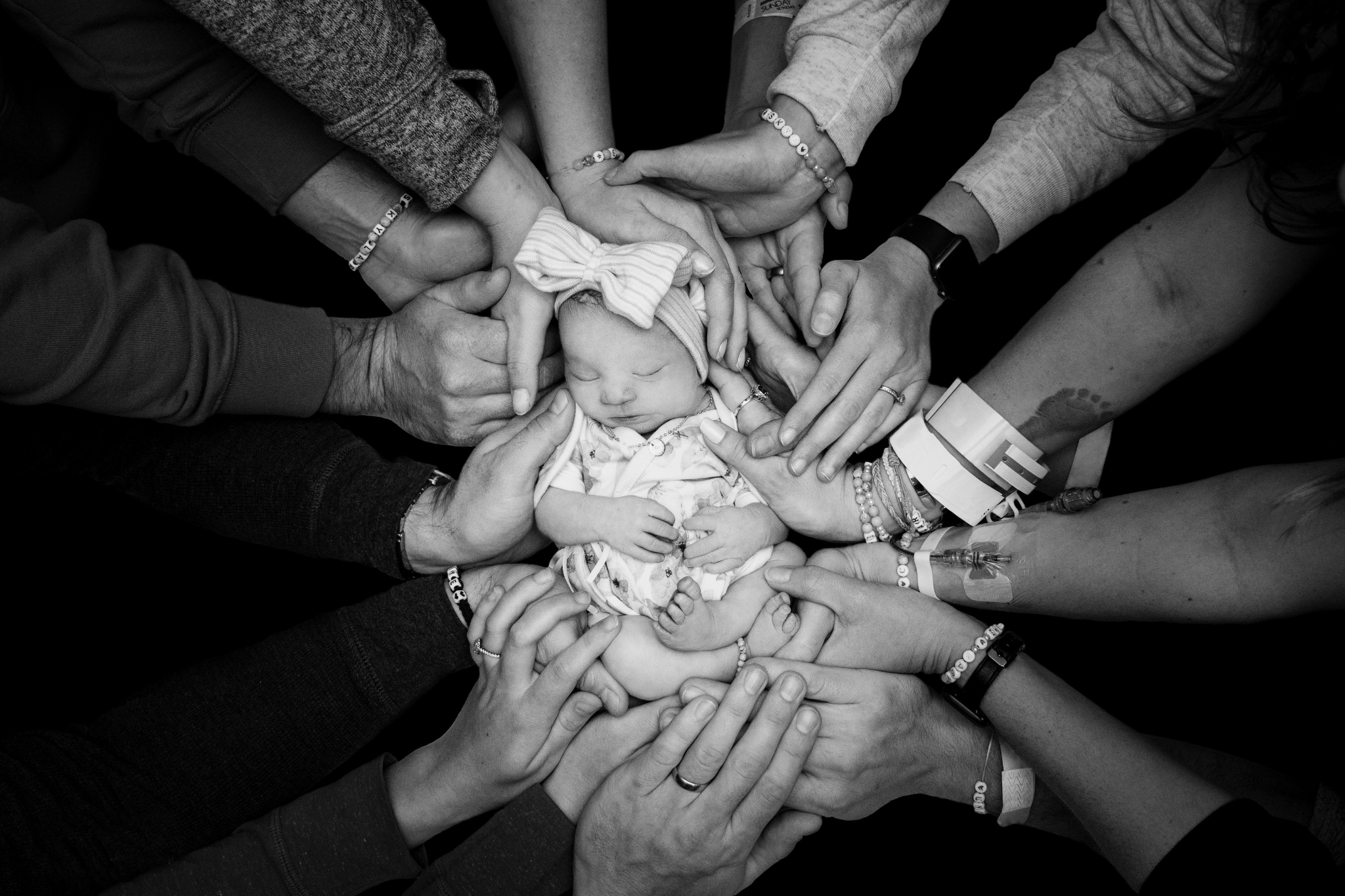
Now I Lay Me Down To Sleep
Providing the gift of remembrance portraits to parents experiencing the death of a baby
WRITTEN BY DAVE SCHLENKER
The first time I heard about Now I Lay Me Down to Sleep was in 2009 while in photo school. The professor was encouraging the class — college kids on the fresh end of twentysomething and then fortysomething me — to use our skills for good, to volunteer, to make a difference with our cameras.
When he mentioned NILMDTS, the Colorado-based nonprofit that takes remembrance portraits of stillborn babies, some cringed. Really? Why would distraught parents want pictures of their deceased infants? This could be the worst day of their lives, so why a forever reminder?
Seemed a little ghoulish.
Then I thought about the worst days of our lives. Two miscarriages. Amy and I were destroyed, emotionally gutted. If we felt that way after losing babies in early trimesters, how must parents — some already loaded with monogrammed blankets — feel after losing full-term children?
Unimaginable.
So what if portraits of these lost angels actually comforted them? What if, as the logic goes, parents placed beautiful photos of their lost babies on the mantels alongside the baby photos of their living children?
They are loved. They are family members.
One night before I could give it a second thought, I broke out the laptop, booked a flight to Denver and registered for a NILMDTS training session. To this day, I cannot explain the force that led me to that laptop. I worked for a newspaper and certainly could not afford Denver on a whim.
Plus, being in the training session did not mean I had been accepted into the program. In fact, many of the people in that session were photography hobbyists, big-hearted humans who did not have the technical and lighting skills. I now had a photography degree, and I honestly wondered if I had the technical ability — never mind the emotional stability — to do a session.
NILMDTS needs photographers who, putting aside the human elements, can nail the session in any circumstance, be it a low-lit NICU cubicle the size of a camping tent or a crowded room packed with family and clergy or a hospital morgue. You HAVE to know what you are doing, and, even with my fancy photography degree, I did not know if I could cut it.
This had to be right. Every. Single. Time.
A few hours before I started writing this, I logged my 247th NILMDTS session. I am an area coordinator who, with the help of assistants and a rotating handful of other photographers, serve Alachua, Citrus and Marion counties.
I am one of thousands of volunteer photographers in 40 countries who, collectively, have delivered 80,000 free sessions to grieving families since NILMDTS started in 2005.
The organization started when Colorado residents Mike and Cheryl Haggard — so thrilled to welcome baby Maddux Achilles into their world — lost their son after six days on life support. In those six days, Cheryl tried photograph their son, but the images did not level up to the professional family portraits at home.
“I saw our tear-stained cheeks, our red swollen eyes, our forced smiles and the fear in our faces as we looked into the camera,” she said.
Through the heavy blankets of grief, they called their photographer friend Sandy Puc, whose heirloom-quality images became the backdrop for an organization that soon touched every state before venturing into other countries.
“NILMDTS offers the gift of healing, hope and honor to parents experiencing the death of a baby through the overwhelming power of remembrance portraits,” NILMDTS noted on its website. “Professional-level photographers volunteer their time to conduct an intimate portrait session, capturing the only moments parents spend with their babies.”
The organization contends these images — black and white portraits as beautiful as any photo already on your mantel — serve as critical steps in healing for bereaved families.
NILMDTS validates the existence of these beloved sons, daughters, grandbabies, little brothers and little sisters.
One of the things I adore about NILMDTS is its commitment to quality. Photographers must be approved, and there also are volunteer spots for assistants and dispatchers and digital-retouch artists.
My training was invaluable. Turns out, I had the technical skills, but I did not know what to say to a mother holding her dead infant.
When I meet people, my first instinct is to say, “Hey! How ya doing?” Of course, these parents are not doing well. As a faithful Presbyterian, I want to say, “I will pray for you,” but not everyone is a praying Presbyterian. Some are pretty ticked at God in that moment.
My training instructed me to just say, “I am so very sorry for your loss. I am here to take beautiful pictures of …” And that is another invaluable training lesson: Learn the baby’s name before you enter the room. That baby is a family member.
Earlier, I said I completed my 247th session, but that doesn’t mean 247 babies. That number is more than 250, as there were several sets of twins. Sometimes one twin survives, sometimes both pass. Tough sessions either way.
This is a volunteer job with no immediate rewards. Often, we quietly wrap up a session and sneak out because the parents become overwhelmed with waves of grief.
But one day, as I was photographing a festival in downtown Ocala, a man tapped me on the shoulder and asked if I remembered him. I did not and apologized.
He said I photographed his infant son whose twin had survived. We photographed them together, one reaching for a brother who did not reach back. I remembered it well.
He thanked me, noting the photos are displayed prominently in their home. Then he paused, smiled and asked, “Want to see our son?”
This, of course, was the surviving twin. I walked toward a happy, healthy toddler in a stroller, approaching nervously for reasons I did not understand. It was like meeting a celebrity.
I choked down welling tears and asked, “Will you show him the pictures?”
“Absolutely,” the father answered. “He will know he has a brother. Always.”
There it was: That is why thousands of volunteers gently walk into hospital rooms with unknown, always different dynamics — sobs of devastation, quiet numbness, anger, singing, euphoria that Jesus has it from here.
These portraits matter, parents have told me, more than we can ever imagine. A photo is forever. As is a brother or sister or son or daughter or grandchild.
“He will know he has a brother.”
I will never forget those words.
“Always.”

For more on Now I Lay Me Down To Sleep and how to help (including donations and volunteer opportunities) go to