
LITTLE MAN, BIG MOUTH

To be sure, I had my share of bullies and broken hearts in high school. I was a twig of a kid sifting through ample peer pressure and drama, but, like many of my classmates in the 1980s, those days also produced great memories and friends who remain in 2026.
Today, things are different for teens. I did not realize how different until I chaperoned a church youth trip last summer to North Carolina.
It was my seventh trip to Montreat, a picturesque Presbyterian college in the mountains that serves as a teen conference center in the summer. I started chaperoning when our daughters were in the youth group and never fell off the volunteer list after they graduated.
I adore these conferences. In small groups, deep talk and emotional support among the teens forge lifelong friendships. On campus, mountains and streams offer adventures that seal more friendships. Here, teens talk openly about faith, family, friends, foes, futures and failures.
Last summer, a conference speaker asked the teens to find the sticky notes at the end of each pew and write down their fears in what-if statements and post the notes on the wall. As the days ticked on, the stone walls in that large conference center were covered in thousands of tiny squares; it looked like an art installation of color and chaos, and it grew throughout the week.
It was as impressive as it was overwhelming, but the messages dwarfed the aesthetics. I spent much of that week scooting along the wall, slowly grasping the weight today’s teens carry. Their honesty was my epiphany—some samples:
“What if I fall short of my goals?”
“What if our democracy fails?”
“What if the way I am good with children goes to waste with infertility?”
“What if, at the end of my life, I was not enough?”
“What if I mess up as a parent?”
“What if my mental health finally gets the best of me and I end it all?”
“What if I die alone?”
“What if the sun explodes?”
“What if my grandma passes before I can say goodbye?”
“What if things at home don’t get any better?”
“What if I die poor?”
“What if my dad tries to take me away from my mom?”
“What if our government damages our country beyond repair?”
“What if I choose a path in my life that doesn’t help anyone?”
“What if I hurt someone I love?”
“What if I lose my family?”
“What if there is another civil war?”
“What if my mom doesn’t make it through her sickness?”
“What if I get enlisted into the draft?”
“What if people stop going to church?”
“What if I lose connection with the people I care about?”
“What if I’m a bad person?”
“What if I’m afraid?”
“What if I disappoint myself?”
“What if everyone in my life dies before I do?”
“What if I get sick like my sister?”
“What if I don’t get to know my grandchildren?”
“What if I pick the wrong career path?”
“What if I wake up one day and my family is gone?”
“What if God’s plan breaks my heart?”
That last one puzzled me. I brought it up with our teens one evening, and one said she thinks about that a lot.
“What if,” she asked in our discussion, “Jesus comes before I get married and have children?”
Whoa.
Some of those fears may have been around when I was a teen, but I was never smart enough to articulate them. Or they never weighed as heavy on me. Perhaps the stakes were not as high.
It is easy to write off today’s teens as moody ghosts slumped over smartphones. Now I know better. These what-ifs are powerful reminders to listen and pay attention. And in the end, there was one sticky note I sincerely identified with:
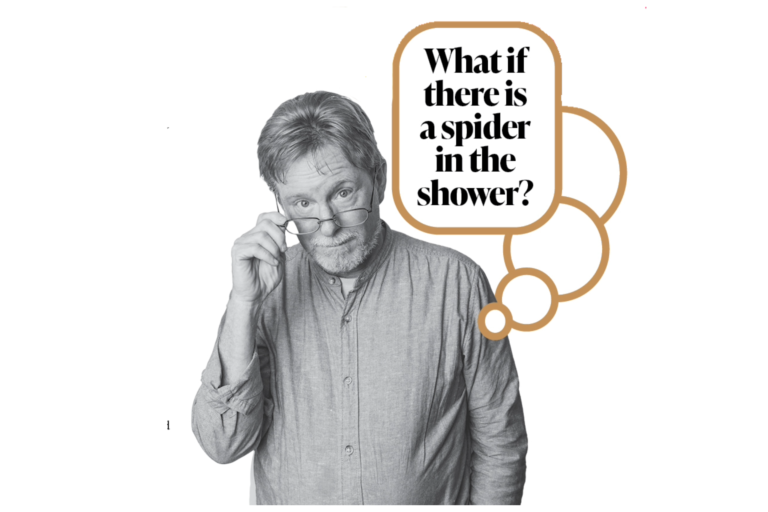
“What if there is a spider in the shower?”
Indeed.