Hemingway perhaps said it best: “Write the truest sentence you know.” That becomes the journey we the readers embark upon—emotionally, psychologically, visually, even physically.
It is said, “Don’t judge a book by its cover.” Yet, we so often choose a book because of its title or cover (or both). Browsing in the Friends of the Library Bookstore, I discovered Michael Hetzer’s Van Gogh’s Lover. I had not heard of this author, yet was intrigued not only by the title but its unique cover art. The opening line of the book is one word: yellow. And the closing line is a quote from Van Gogh: “There is nothing more truly artistic than to love people.”
Today, we encounter books that are literally works of art. Classic leather-bound with gold-leaf edges and the newest embellished covers with sprayed or stenciled edges or “fore-edge” book painting such as Rebecca Yarros’ Fourth Wing series.
And how many books, fiction and nonfiction alike, contain the word art in the title? Goodreads Listopia catalogs some 462. In a scene from the movie Julie & Julia, based on the book by Julie Powell, Julie & Julia: My Year of Cooking Dangerously, Julia and her editor ponder what to title her now-classic Mastering the Art of French Cooking.
Julia Cameron challenges us to travel The Artist’s Way—a 12-week journey of rediscovering our creativity. More recent compelling research into the science of neuroaesthetics—how the brain responds to art—is outlined in Your Brain on Art: How the Arts Transform Us by Susan Magsamen and Ivy Ross. Their bold statement says it all: “… we now have scientific proof that the arts are essential to our very survival.”
The confluence of artistic expression with books and reading is evident in Ocala. From the wealth of book clubs exploring all genres, the life-changing adult literacy programming of the Marion Literacy Council, our extensive public library system highlighted by the mural panels on the exterior façade of the HQ library, the Appleton Museum’s online book club during COVID, and RJ Jenkins’ lecture series for Marion Cultural Alliance, to last month’s Art Park Literary and Poetry Festival with many local authors present (look for their stories in future columns!).
But perhaps the greatest impact of the arts in our lived lives is their proven healing power, as seen in this issue’s on Arts in Health Ocala Metro. [Full disclosure—I am honored to serve as AIHOM board chair.]
While intuitively we understand how the arts have a tangible effect on our moods and attitudes, there exists scientific evidence that the arts have a direct impact on our overall health and well-being. Authors Louise Penny (Three Pines/Inspector Gamache series) and Deborah Harkness (All Souls Trilogy) both highlight and publish the playlists that serve as background music while they write. The former surgeon general of the U.S., Dr. Vivek Murthy, author of Together: The Healing Power of Connection in a Sometimes-Lonely World, writes on his Substack page, “Staying Human,” a reflection titled “Songs for Staying Human Parts 1 and 2,” where he reminisces about his personal mixtapes (yes, there is indeed such a thing!) from his medical school and residency days.
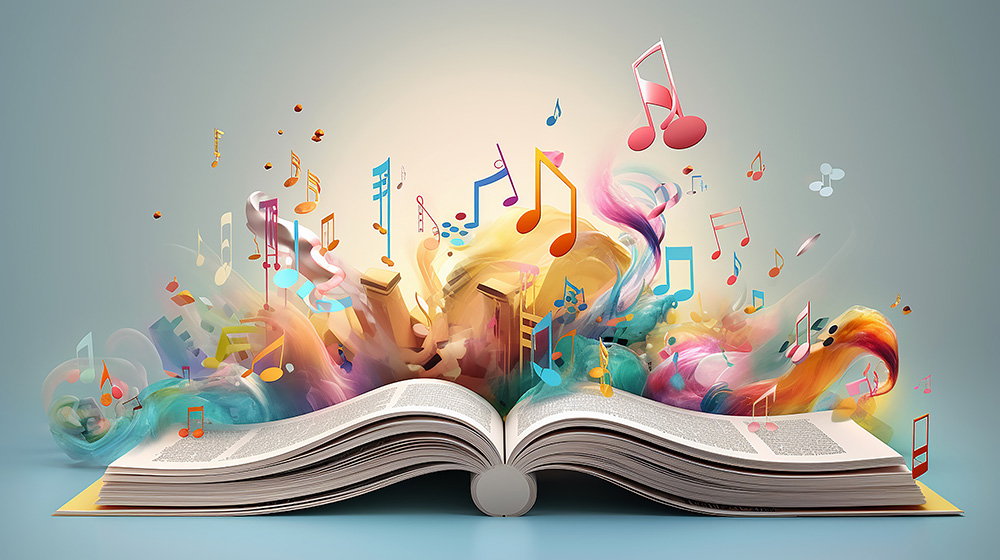
Renée Fleming, internationally known soprano, launched the Sound Health Network in conjunction with the Kennedy Center, the National Institutes of Health and the NEA. During COVID she premiered a 19-part online series, Music and Mind Live. Her recent anthology—Music and Mind: Harnessing the Arts for Health and Wellness—features essays from artists such as cellist Yo-Yo Ma, scientists, physicians and health care professionals on the “intersection of arts and health,” with a foreword by Dr. Francis Collins, former director of the NIH who spearheaded the Genome Project. She writes in the prologue—appropriately titled “Overture”:
Performers know how intrinsically healing the arts can be. Many of history’s prodigies didn’t survive much past age 30 and dealt with crippling illnesses themselves, and yet they left the world with works of art that fill us with wonder, are stunning in their craft and genius, and still resonate with us today. How fortunate then, that science is now exploring the mechanisms behind human engagement with the arts.
As a leading advocate for the ongoing research at the intersection of the arts, health and, in particular, neuroscience, Renée Fleming’s compilation in Music and Mind is a seminal resource into these life-changing developments.