Romantasy in February
BY: BARBARA FITOS
February—the season of love and the month we honor the legacy of Black history.
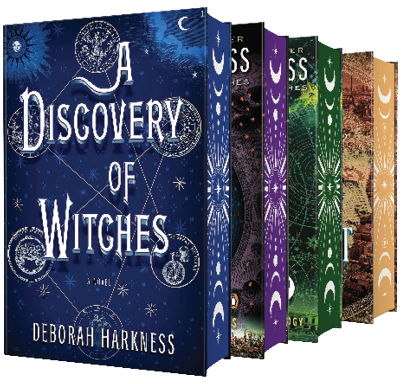
What better way to begin than with “romantasy”—the newest subgenre combining fantasy and romance. “Romantic fantasy,” coined in 2008, became wildly and virally popular on social media through such authors as Sarah J. Maas and Rebecca Yarros. Rebecca’s Fourth Wing and Sarah’s A Court of Thorns and Roses top the list of dozens of titles on Goodreads. My favorite of what could be called “romantasy” is Deborah Harkness’ A Discovery of Witches—the first in her All Souls Trilogy. Deborah is a renowned medieval historian, so her tale of witches, vampires, and daemons (oh my!) in wonderfully historic settings is a treat for those in love with historical fiction with a decided twist. Have you or your book club become enamored yet?
A literary genre that superseded “romantasy” is magical realism, which became widely used in the mid-20th century and beyond to define the works of such Latin American authors as Gabriel García Márquez (One Hundred Years of Solitude) and Isabel Allende (The House of the Spirits). Magical realism focuses on magical, often unbelievable elements interwoven with the mundane and the ordinary. And as we move into the celebration of Black History Month, Toni Morrison’s Pulitzer Prize–winning classic Beloved is an iconic representation of magical realism, although Morrison herself preferred the term “enchantment.”
Toni’s extensive body of work, both fiction and nonfiction alike, is a rich and in-depth tapestry of the Black experience in America. The opening line of The Bluest Eye is perhaps my favorite:
Quiet as it’s kept, there were no marigolds in the fall of 1941.
I was honored to teach a retrospective on her work for Senior Learners. Another favorite is nonfiction writer Ta-Nehisi Coates, who turned to magical realism in his first work of fiction—The Water Dancer—with its themes of slavery and the Underground Railroad, in which Harriet Tubman plays a vital role.
Writers of Black history and the Black experience are prolific and range from nonfiction works such as Nikole Hannah-Jones’ The 1619 Project, Ibram X. Kendi’s Four Hundred Souls, Isabel Wilkerson’s Caste, and Congressman John Lewis’ graphic trilogy March. Add to that the amazing writers of fiction and the brilliant poetry of Maya Angelou, and the sheer magic of Amanda Gorman, our youngest inaugural poet, who mesmerized us with The Hill We Climb. Avail yourself of these titles from our public library.
Be aware, too, of a wonderful new program right here in Ocala—the Freedom Library. An initiative of the national NAACP, these libraries feature banned book titles and books on African American history geared predominantly toward children, made possible through the generous donations of sponsors, partners, and book lovers like us. Ocala’s Freedom Library opened at New Covenant Missionary Baptist Church in memory of the late Rudelle Campbell Berry, a dedicated educator and life member of the Ocala Royal Dames.
Yes, we read for the romance, the fantasy, the magic, the inspiration—yet we also learn so much more: our shared history; that we are part of something greater than ourselves. As the late James Baldwin so eloquently stated:
“You think your pain and your heartbreak are unprecedented in the history of the world, but then you read.”
Local Author Spotlight
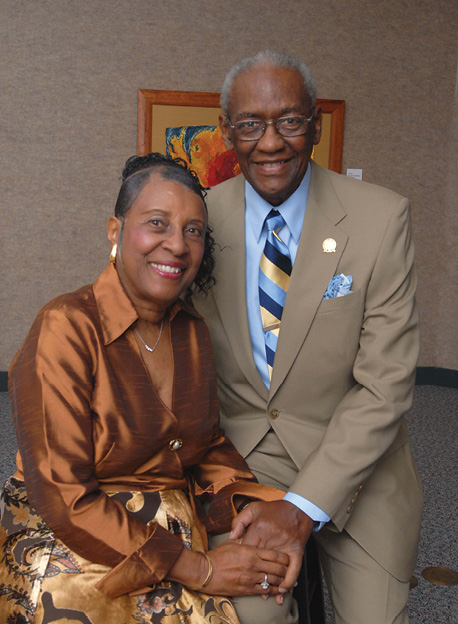
Here in our midst is our own Naida Rasbury—some would say the “better half” to the late Lt. Col. Frank Rasbury, whom we lost in July of last year. Frank and Naida are household names in Ocala/Marion County, whose love for and dedication to this community are legendary, as evidenced by the numerous and well-deserved accolades and tributes bestowed upon them. Frank and Naida are the epitome of the Rotary theme of “Service Above Self”—one of Frank’s key passions.
In 2019, Naida quietly and without fanfare released her memoir, Songbird. Originally having printed only 50 copies, I was honored to receive one as a fellow Royal Dame and library lover.
And the title is illustrative. Many of us have had the privilege of hearing Naida’s beautiful singing voice. Naida herself describes it as having been “blessed with a native talent for singing.” At the age of seven, she, along with her mother, appeared in the first Broadway production of Gershwin’s Porgy and Bess.
But this was just the beginning of her storied international journey, which took her from her native New York to the touring company of Porgy and Bess, to Haiti, and then to Nigeria, where she met and married her first husband—only to flee back to New York following the pogroms in 1966. Back in New York, she ultimately divorced and met and married Frank Rasbury in 1972. She and Frank both had careers in the city and retired to Ocala in 1987 following a chance introduction to the Silver Springs Shores community by a co-worker who was a sales representative for General Development Corporation.
And the rest, as they say, is history—a history come full circle, for in 2012 Naida was invited to attend the premiere of the Broadway reprisal of Porgy and Bess by its star, Audra McDonald. The Songbird story lives not only in the pages of Naida’s memoir, but in the hearts of all of us who love her.